
I’ve talked a lot about the skills I believe that great coaches have but how do you become one?
Is it by knowing every coaching question out there? learning lots of coaching models? your life experience? being a naturally good listener? or doing a qualification?
The answer is it’s a whole host of things and it’s why when I founded Optimus Coach Academy seven years ago I wanted to create something different in the space: something which I hadn’t experienced and didn’t seem to exist.
Having spent over 30 years studying Psychology with over 10,000 coaching hours alongside being a teacher and trainer I knew that becoming a great coach isn’t about a model, framework or magic list of questions.
For me it’s about psychological understanding, practical coaching experience and personal development to help people become confident, competent coaches who could work with a wide range of clients and all of this can be trained.
Knowing how to coach and becoming a great coach are not necessarily the same thing.
At Optimus, our approach to coach training is built around three interconnected elements.
1. We develop YOU as a coach
One of the most important things we teach isn’t a model or a technique.
It’s how to develop yourself as a coach it’s why our students talk about how they’ve changed over the course and it’s the part of coach training many people don’t realise is critical.
We all bring our own beliefs, experiences, assumptions, emotions and ways of seeing the world into their coaching conversations.
These can be incredibly valuable, but they can also influence how we listen, respond and connect with clients. We often are challenging our own lens and identity as much as that of the client.
For example, imagine a client tells you they want to leave a secure job to start a business. You might be unconsciously focusing on the risks if security is a big one for you or if you’re naturally entrepreneurial, you might find yourself encouraging them to take the leap. Your lens impacts the questions that you ask.
Great coaching requires us to recognise our own perspectives and remain curious about the client’s experience.
This is why we place such an emphasis on self-awareness, reflective practice, emotional regulation, emotional intelligence, intuition and developing your coaching presence.
We want you to understand how you show up in conversations, how you build trust and how you create an environment where people feel able to explore how they think, feel and act as well as going deeper into intuition and identity.
There is such a difference between “doing” coaching and “being” a coach which is why we always start with you and how you can apply what you’re learning as well as working with you 1:1 to reflect and deepen your approach.
You are one of your most important coaching tools, and learning to use that tool effectively is central to our training.
2. We help you develop a flexible coaching toolkit
Coaching models can be incredibly helpful, particularly when you’re starting out and it’s why we start there : they provide structure, build confidence and give you a way to navigate conversations.
We’ve always been clear they are a starting point not an ending point as our brains are not as linear as the model and for many clients the models don’t work.
For example: some clients come into coaching sessions focused and clear on what they want to look at or their goal for other clients it’s about doing exploration first to get clarity on what would be most useful.
Flexibility and personalisation support you to work more effectively with a range of clients beyond a model. This is why we talk about adaptive frameworks and teach you different approaches so you can tailor the experience for your clients.
And.. it’s not only about learning from Positive Psychology, Emotional Intelligence, Neuroscience and Coaching Psychology it’s about applying the learning to different scenarios so you have the confidence to work with a wide variety of clients.
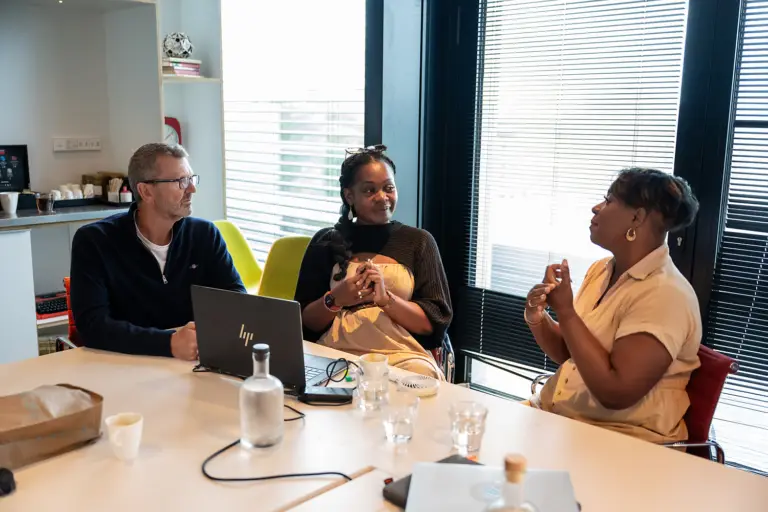
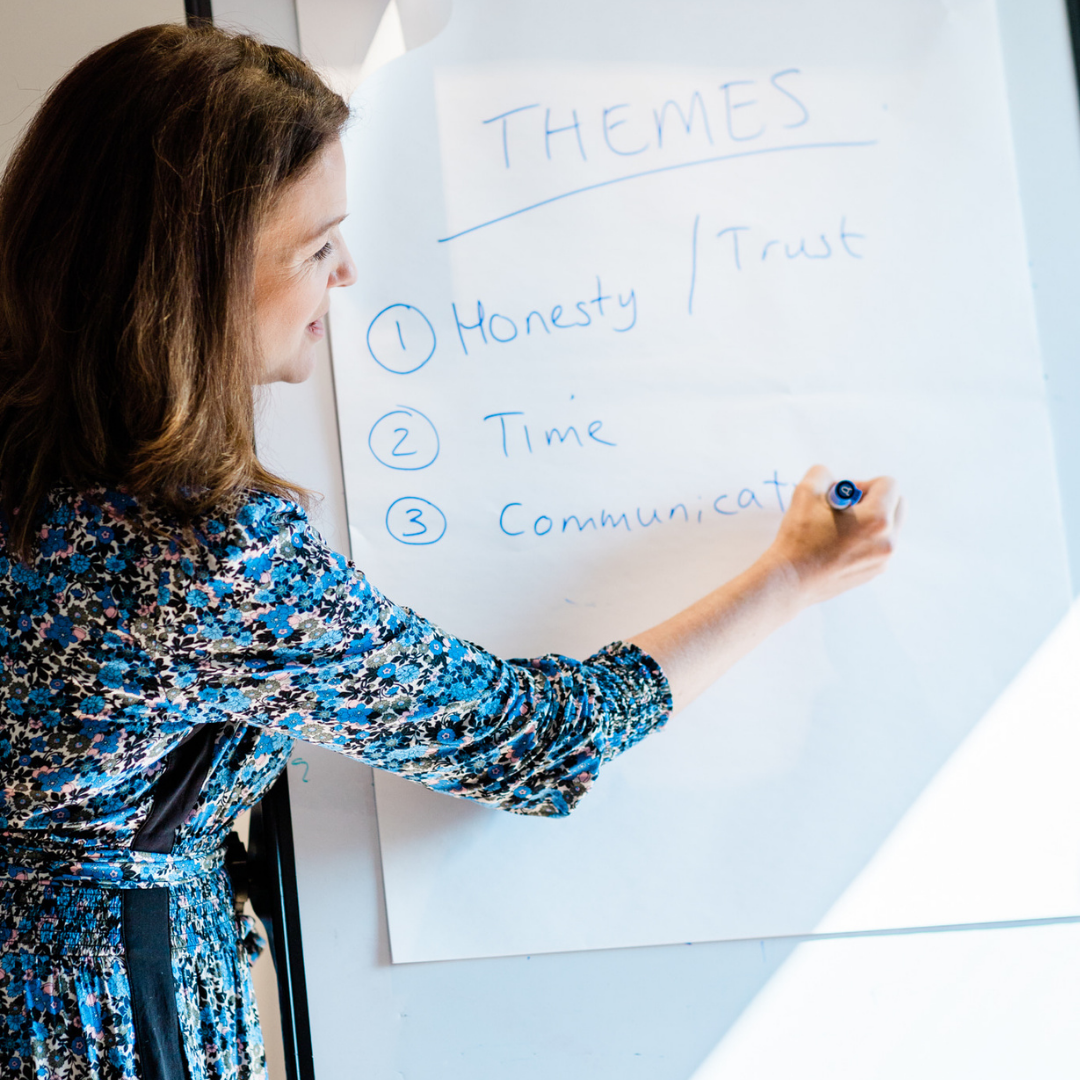
We do this using demonstrations, real-life coaching scenarios, practice and developmental feedback to help you understand when different approaches might be useful and how to work flexibly with the person in front of you as well as giving you space to discuss your own experience.
We don’t want you to become a copy of your trainer or coach in one way : we want you to have the skills to work with a whole range of clients with confidence.
We want you to develop your own coaching style, grounded in strong coaching competencies and ethical practice.
3. We teach you the psychology behind why coaching works
This is an area I’m particularly passionate about because so many courses lack Psychological depth.
I believe that understanding psychology and neuroscience can make us more informed, adaptable and effective coaches and I believe in looking at recent research and ideas when we’re developing our curriculum.
Coaching is ultimately about supporting people to develop greater awareness, make decisions and create meaningful change and this is complex : it’s why we work with clients over time to support building new neural pathways.
Our emotions, beliefs, habits, identity, motivation, environment, biases, values, assumptions, context and relationships can all influence our behaviour.
Think about a client who wants to become more confident : you can easily help them to set a goal and support them with actions. However what if they have an underlying belief that they’re not good enough or they get a strong stress response in certain situations? What if their confidence changes depending on the environment they’re in?
Understanding the psychology behind these experiences can help us ask more informed questions and explore different perspectives : this is where the whole person approach equally comes in as we encourage you to work with the person in front of you.
At Optimus, we integrate psychology and neuroscience throughout our training, rather than teaching them as isolated subjects and we talk about how we can use these in our approaches as well as recognising what is going on at a deeper level.
We explore why people get stuck, what influences behaviour, how our brains respond to stress and uncertainty, and how coaching can support new ways of thinking and acting: this is one of the core themes which runs through our training.
We also teach the importance of professional boundaries and knowing when another form of support may be more appropriate as we’re very clear on the difference between coaching and other interventions.
Our ethos is about helping coaches develop a deeper understanding of human behaviour so they can work with the whole person.
4. We believe you learn to coach by coaching
You can read dozens of books about coaching, understand lots of theories and watch experienced coaches in action.
But that doesn’t automatically make you an effective coach, you need to practice and reflect and develop.
And you need opportunities to receive feedback. This is one of our core pillars and we give you lots of feedback as we believe this supports your growth.
Our Diplomas include coaching practice in nearly every session, alongside substantial opportunities to develop your skills outside the classroom and submitted recordings which you get written feedback on you can then discuss with your mentor.
This means you aren’t simply learning about coaching, you’re developing the skills, confidence and self-awareness to coach real people.
And because we recognise that everyone learns differently, we aim to create an inclusive and supportive environment where you can ask questions, experiment and develop your own approach.
5. We want you to understand the whole person, not just the goal
At the heart of our teaching is a whole-person approach. This means recognising that people don’t arrive at coaching sessions as a collection of isolated goals.
They bring their thoughts, emotions, physical experiences, relationships, values, beliefs and wider life circumstances.
A goal might be the starting point, but a coaching conversation can open up awareness about much more and we believe that coaching is about supporting clients with new insights rather than ticking off a list of actions.
We teach our students to stay curious about the whole person rather than rushing to find the problem and fix it as often what our clients have initially brought into the coaching space is not the main focus. It takes skill and space to help your clients get this insight.
This is what allows coaching to become a deeper process of discovery, awareness and change.
What does this mean for you if you’re thinking about becoming a coach?
You don’t need to have all these skills before you start training that is our job.
When we kick off we look at what skills you have : maybe you’re a great listener or you ask people about how they’re feeling, or maybe you have natural empathy or you can spot patterns. We play to your existing strengths as these support you to build your own style and then we develop and build from there.
Wherever you’re starting from, coaching is a skill you can learn and continue to develop and I believe the way you’re taught makes a significant difference.
You need more than information you need to apply it, to learn and to make mistakes to truly embrace the messy middle and go from there.
Come and experience how we teach coaching — completely free
If you’re curious about becoming a coach, or you want to develop your existing skills, I’d love to invite you to our free Coaching Workshop Week from 2–6 November 2026.
We’ve taken three important areas from our coach training and turned them into practical, accessible workshops so you can experience the Optimus approach for yourself.
Monday 2 November: What Makes a Great Coach? Why AI Can’t Replace Human Coaches
Discover the human skills that make coaching powerful and explore how to start developing them.
Wednesday 4 November: How Coaching Changes the Way We Think, Feel and Behave
Explore the psychology and neuroscience behind behaviour change and learn practical approaches to understanding why people get stuck.
Friday 6 November: The Secret to Great Coaching — It’s Not Just Models and Frameworks
Discover the importance of presence, self-awareness, listening and connection in creating effective coaching conversations.
All three workshops take place at 1.15pm UK time, last approximately 45 minutes and are completely free.
You don’t need any previous coaching experience, and you’ll receive recordings if you can’t join us live.
You’ll get a real insight into how we teach, what makes our approach different and whether coaching could be the right next step for you.
Join our FREE Coaching Workshop Week and experience the Optimus approach for yourself
I’d love to see you there.